This testimony includes suicidal intent, addiction, domestic violence and childhood sexual abuse. If you are struggling, please reach out to a crisis line in your country or someone you trust today. You are not alone.
Freddie Hidalgo had a loaded gun and a plan. He would climb the mountain near his Arizona town and end his life. First, though, he agreed to one last smoke with a friend. The friend never showed up. The meeting place was across the street from a church.
More than two decades later, Freddie pastors a church on a Native American reservation in Arizona. In this episode of the God’s Truth Podcast, he tells Abigail Smith how a self-described atheist dabbling in voodoo walked into that church, was set free from demons at the altar, and went home to burn his old life in his backyard. What follows is his account.
A hunger for the wrong spirituality
Freddie grew up in a home where, he says, the men were abusive to the women. One of his earliest memories is of his mother being thrown into a wall. His parents divorced when he was seven, and his mother fled with him to Texas, where for a time they slept in the back seat of their car. When she found work on the graveyard shift at a convenience store, he slept behind her feet at the till.
It was a spiritual home, but, as he puts it, the wrong spirituality. His grandmother read tarot cards and palms, and people paid to have their fortunes told at her kitchen table. He watched clients lay their right hand on each pile of cards and speak the words “my family, my house and my future.” Looking back, he sees it as giving the devil permission.
Without a father who wanted him, Freddie says he grew up feeling like an accident and hating himself. From fifteen he was using cocaine and methamphetamine, and he threw himself into every pleasure he could find. It became an addiction to sex and pornography that eventually led him into the adult film industry. The meth, he says, numbed the conscience that still told him something was wrong. He called himself an atheist and liked to humiliate Christians in debates. He threw beer bottles at churches. Yet when he was drunk or broken, he would cry out to the God he claimed did not exist: “I hate You.”
At around twenty, after an arrest for drink-driving and another for possession, he looked at his life and saw nothing ahead. That was when he got the gun.
The friend who never came
The friend had asked Freddie to meet him at the church because his little sister was in its Christmas Eve drama. Freddie only stepped inside to look for him. He did not know his friend had been pulled over by the police on the way.
The drama on stage told the story of a broken family, an alcoholic father and a teenage son arrested for drugs. Freddie felt he was watching his own life. When the preacher began to prophesy, Freddie’s hands started to sweat until they dripped. He blamed the meth. Then the preacher stopped the service and said there was a young man in the house, and began naming the very sins Freddie was committing. Voices in his head told him to leave, that this was fake. But tears were running down his face.
“Who do you think you are?”
He had never seen an altar call. People urged him forward, and he curled up on the floor, hiding his face. When hands were laid on him, something rose up in him. He pounded the carpet until his knuckles bled, then decided that on the count of three he would choke the man praying for him. On three, he raised his hands, and they began to tremble.
For the first time in his life, God spoke to him. It was not an audible voice, but it was unmistakable: “Who do you think you are? You better let these people pray for you.” It was the voice of a father about to discipline his son. Freddie later read that the Lord chastens those He loves (Hebrews 12:6).
The pastor laid a hand on his head and told him that he had come in with many demons, and that he would now speak directly to them, not to Freddie. “Do you understand?” Freddie nodded. He believes that agreement gave God permission, the reverse of the permission his grandmother’s clients gave at the tarot table. The pastor commanded the demons to leave in Jesus’ name. Freddie felt something tear loose deep in his abdomen. For about twenty minutes he writhed on the floor. His future wife, who did not know him yet, was there and says he slithered like a snake.
Someone called out, “Lift up your head to God! Don’t let the devil see you’re a coward.” He tried to raise his hands and could not. Then he forced them up anyway, while a voice in his head mocked him for surrendering. When he opened his eyes, he was surrounded by blinding white light. “Jesus,” he said. “I need You.” His contorted body went limp, he fell backwards, and he began to laugh like a baby being tickled. The whole church erupted. Like the boy in Mark 9:26, he had been left “as one dead,” and then raised up free.
A bonfire in the backyard
That night he took out his tongue ring, nose ring, earrings and every ring on his fingers, a mask he had never taken off, and was baptised in the name of Jesus Christ for the remission of sins (Acts 2:38). He came up from the water weeping with gratitude. His earthly father had abandoned him, but now he had a Father in heaven (Psalm 27:10).
Driving home, dark music started playing on his CD player. For once he switched it off and drove in silence, talking to God, and God talked back. The next morning he filled seven or eight bin bags with posters, drugs, pornography, CDs and clothes printed with the logos of the bands he followed, wheeled them into the backyard and set them alight. God showed him that each album had been like a spell, he says, a way of medicating one broken part of his heart after another. Burning them felt like another level of deliverance.
At the very next midweek service, as he whispered “I love You, Jesus” over and over, his pastor laid a hand on him, and the words turned into a language he had never learned. He prayed in the Spirit until three in the morning (Acts 2:4).
Remembering, and forgiving
Months later, as he asked God why he had been so driven by sexual compulsion, the Holy Spirit brought back a memory Freddie had buried completely. As a small boy, he had been sexually abused at a babysitter’s home. He says God told him Satan had tried to destroy his calling as a child, but that God would use his story as a key to unlock healing for many others who had suffered the same thing.
Freddie is honest that deliverance is a process. Six months in, a sermon on unforgiveness exposed his anger toward his father. At the altar, he felt the same spiritual battle rise up again and slipped into a corner by the organ to cry out, “God, help me forgive my dad.” His youth pastor shielded him from the crowd and prayed him through (Matthew 6:14–15). He compares the process to opening the closed rooms of the heart one by one and letting God clean them out, exchanging mourning for the oil of joy (Isaiah 61:3). He also learned to repent on behalf of his bloodline, renouncing the witchcraft and adultery of the generations before him.
Spiritual attacks came too, especially in the early months, including terrifying episodes when he could not move or speak. They have become rarer over the years, and now, he says, the Holy Spirit gives him discernment and authority over them.
The friend, the wife and the children
The friend who never showed up turned out to be a backslider from that very church. When he saw what had happened to Freddie, he came back to God too, and the two spent their first years in ministry together in the youth group.
Afraid of the man he used to be, Freddie at first vowed never to marry. He asked God to teach him faithfulness, starting with faithfulness to God Himself. Then he noticed a young woman in the youth group who was at every prayer meeting, every altar call and every outreach, and who loved children. They married, and Freddie determined to protect their four children from what had happened to him. He encourages parents to guard their children closely, whatever it costs.
You must be born again
Freddie closes with John 3:5–8. Jesus told Nicodemus that a person must be born of water and of the Spirit, and that the Spirit is like the wind: you hear its sound but cannot tell where it comes from. He sees that sound at every altar call, when people are filled with the Holy Spirit. Whether you are just starting with God or have walked with Him for years, he says, being filled with the Spirit is the most vital tool in your arsenal.
Connect with Freddie Hidalgo
- YouTube: Federico Hidalgo
Scriptures in this episode
- Hebrews 12:6, whom the Lord loveth He chasteneth
- Mark 9:26, the spirit cried, and he was as one dead
- Acts 2:38, repent, and be baptised
- Acts 2:4, they began to speak with other tongues
- Psalm 27:10, when my father and my mother forsake me
- Matthew 6:14–15, if ye forgive men their trespasses
- Isaiah 61:3, the oil of joy for mourning
- Hebrews 4:12, sharper than any twoedged sword
- 1 Corinthians 15:31, I die daily
- John 3:5–8, ye must be born again
Watch the full testimony
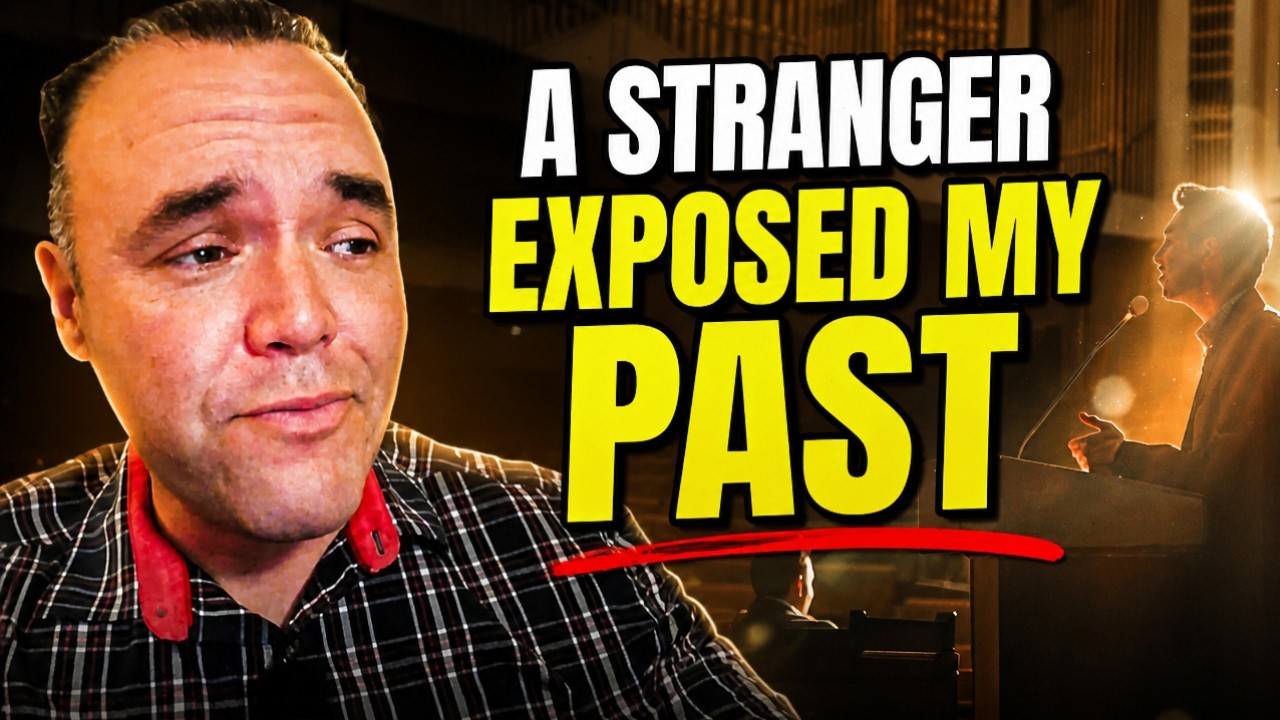
Now hear it in their own words. Press play to watch the full conversation on the God’s Truth Podcast.
Go deeper
Has God given you a testimony? Share it with us. Want to go further? Become a member, or join our free Christian community.
Read more testimonies like this one on The Record.