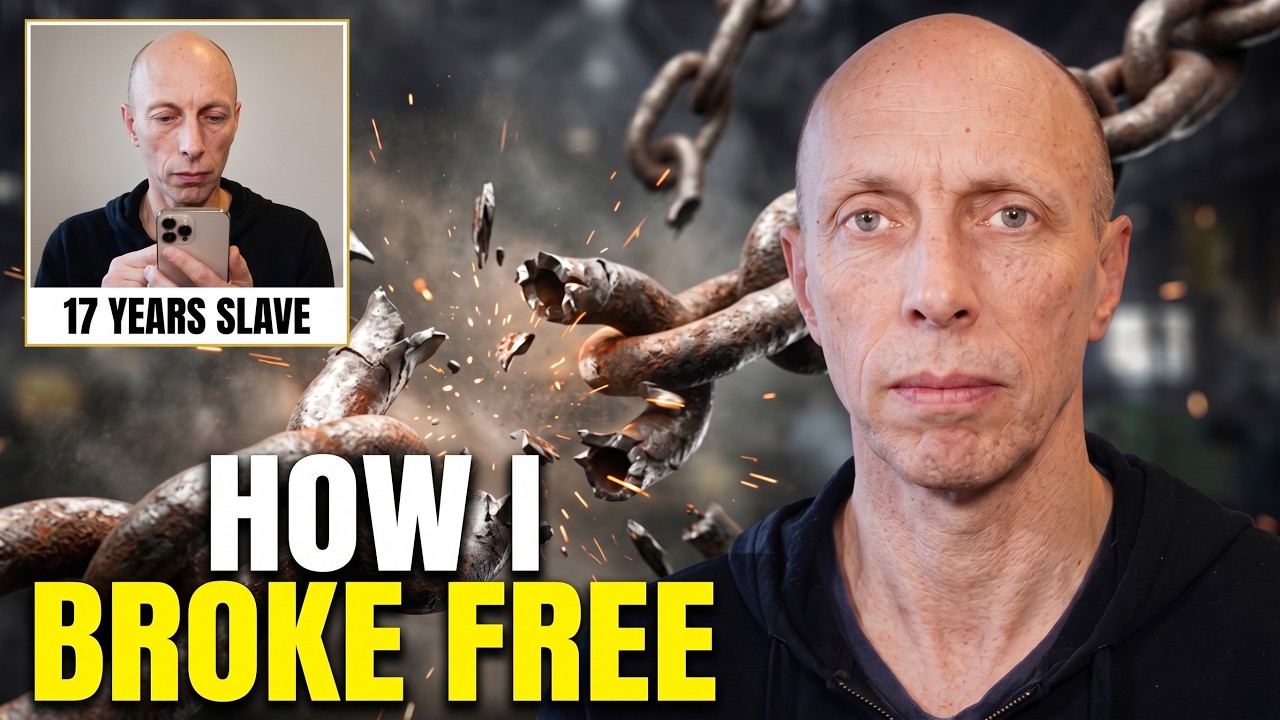
Peter Skov was a pastor, a worship-filled, Bible-reading, top church volunteer. He was also, for seventeen years, secretly addicted to pornography. Willpower failed him again and again. Then one day on his sofa he asked God a simple question, and the answer exposed something he never expected: he had been taking God to court, and winning every case.
In this episode of the God’s Truth Podcast, the Danish teacher behind Action Christianity tells Abigail Smith how he found lasting freedom, and why he believes rejection is a lie that was defeated at the cross. What follows is his account.
A regular Danish guy looking for truth
Peter grew up in an ordinary Danish family. He was baptised and confirmed in the Lutheran state church but “didn’t find God there.” A school friend, also called Peter, lent him Christian books and invited him to meetings, and the big questions started: Is there a God? What is truth? He was not in crisis, he says, just “an average guy having a good life.” But he decided that if God existed, nothing could be more important than meeting Him.
Christianity was at the bottom of his list. For about two and a half years he studied everything else, including the New Age and reincarnation. Then he read a book about a man who died during the Second World War and met Jesus. What struck him was a Jesus who knew “every dark thing about me” and loved him anyway: “no condemnation at all. No shame, no guilt, just forgiveness and love.” His friend read it and said, “This is the Jesus I know.”
In 1994, aged 19, Peter gave his life to Christ. There was no angel or vision, just a sudden, lasting peace and a warmth inside him. Soon after, he read Jesus’ words: “Peace I leave with you, my peace I give unto you” (John 14:27).
Free for ten years, then bound for seventeen
Peter had watched porn before he was saved. When he read in a Christian book that believers shouldn’t, he simply stopped. “It was super easy.” He stayed free for ten years, studied theology and planted a church in his old hometown in West Jutland.
The church grew, then dwindled. In 2004, aged 29, married with children, Peter closed it. Soon afterwards he went back to porn, and this time willpower did not work. For seventeen years he tried to make “the right, deep enough decision.” He stayed clean for months at a time, then fell again. “I hated myself for doing it.” Meanwhile he built a career in IT, kept serving in church, led at Christian camps, spoke in tongues and even saw healings. None of it set him free.
Around 2020 everything seemed to be going wrong: heavy debt despite a good income, a house that would not sell, strain in his family and problems at church. He felt he was no longer living in his calling.
“God, why are You so far away?”
Peter had begun listening to prophetic voices who had a childlike, intimate friendship with God, and he wanted that. So one day he sat down on his sofa just to “hang out” with God. Instead, God felt “a million miles away and kind of disinterested.”
“God, why are You so far away?” he asked. The answer came as a thought he later recognised as God’s: “Peter, that’s because you have decided not to give Me the core, the very heart of your heart.”
When he asked why, he felt taken back to 2004. He saw himself saying, in effect: You called me, and You didn’t help me. He had judged God and decided to pay Him back by holding back his heart. It was a bitter root of unforgiveness against God (Hebrews 12:15).
Taking God to court
Then came a flood. You didn’t help me with the porn. You didn’t help with the money. You didn’t help with my daughter. “Today I call them court cases,” Peter says. “I had waged a legal battle against God, and I had won.” In every case he had found God guilty. And he realised he could not intimately trust a God he believed was unfair.
So he prayed a prayer that was at once defiant, broken and full of faith: “I’m sick. Do You have any medicine?” He was holding Jesus to His word that the sick need a physician (Mark 2:17).
The answer: “Look at the cross.”
“That’s not good enough,” Peter replied. “I know the cross. I’ve preached about the cross. It hasn’t helped me so far.” He says that answer shows how rejected and orphaned he felt.
Then came a loving rebuke: “Peter, you need to make a decision, and you need to grow up. Stop being like a little hurt child. Make a decision whether I am good or not.” And again: “Look at the cross.”
Peter made a decision. It was not based on how he felt, but on the truth of the cross: God is good. He realised he had made his calling his god, along with his circumstances and his emotions, which he calls major idols for many Christians. He repented of them and of his accusations against God. Then, with the authority that repentance restored, he commanded the demons to leave. There was no drama. Just freedom.
At the time of recording, he had been free from pornography for about six and a half years. “It’s not like a struggle,” he says. “The replacement of the porn is the love of the Father.”
You have never been rejected
At the root of it all, Peter found rejection. On the cross, he says, Jesus became sin (2 Corinthians 5:21), became a curse (Galatians 3:13), and bore our rejection, so that we would never have to. “I’ve never been rejected. It’s a lie from the pit of hell.” When we believe we are rejected, he warns, we take on an identity that belongs to demons, not to sons and daughters.
If we cannot trust God, he says, we will look for satisfaction somewhere else: porn, smoking, gambling, food, drink, the approval of people. “You were made to be full of the satisfaction of the Father.” He also urges believers to keep their calling separate from their relationship with God. A calling can go up and down. The relationship rests on the blood of Jesus and does not change.
The kingdom is voice-activated
For Peter, deliverance is largely about coming out of agreement with lies. Repentance and casting out belong together, he says, or what left comes back worse (Matthew 12:43–45). He notes that when Satan tempted Jesus, Jesus did not just quote Scripture. He commanded, “Get thee hence, Satan” (Matthew 4:10). “The kingdom of heaven is voice-activated,” Peter says. “You can’t delegate back to God what He’s delegated to you.” Believers need to learn to speak with authority in Jesus’ name.
He shares the story of a pastor of a large charismatic movement who secretly smoked because he felt unappreciated and had come to believe he had lost his calling. When Peter asked him to declare, “I have not lost my calling,” he physically could not get the words out. When he finally did, through tears, the bondage broke, and he has not smoked since.
Today Peter ministers full time, praying for people in homes, online and on the streets, freely and supported by donations. “Freely I have received, freely I give” (Matthew 10:8). His encouragement to anyone in a season of suffering is the same word he received: look at the cross.
Connect with Peter Skov
- Website: Action Christianity, including his free guided inner healing and deliverance series
- Book: Free Will, Inner Healing and Freedom from Evil Spirits, with 23 tools for inner healing and deliverance
Scriptures in this episode
- John 14:27, My peace I give unto you
- Hebrews 12:15, lest any root of bitterness spring up
- Mark 2:17, they that are sick need a physician
- 2 Corinthians 5:21, He hath made Him to be sin for us
- Galatians 3:13, being made a curse for us
- Romans 8:1, no condemnation
- Romans 8:15, the Spirit of adoption, whereby we cry, Abba, Father
- James 1:8, a double minded man
- Matthew 4:10, Get thee hence, Satan
- Matthew 12:43–45, the unclean spirit returns
- 1 Corinthians 6:19, your body is the temple of the Holy Ghost
- Matthew 10:8, freely ye have received, freely give
Watch the full testimony
Now hear it in their own words. Press play to watch the full conversation on the God’s Truth Podcast.
Go deeper
Has God given you a testimony? Share it with us. Want to go further? Become a member, or join our free Christian community.
Read more testimonies like this one on The Record.